2026
Ibis
Mac & Windows App · Enterprise AI Assistant
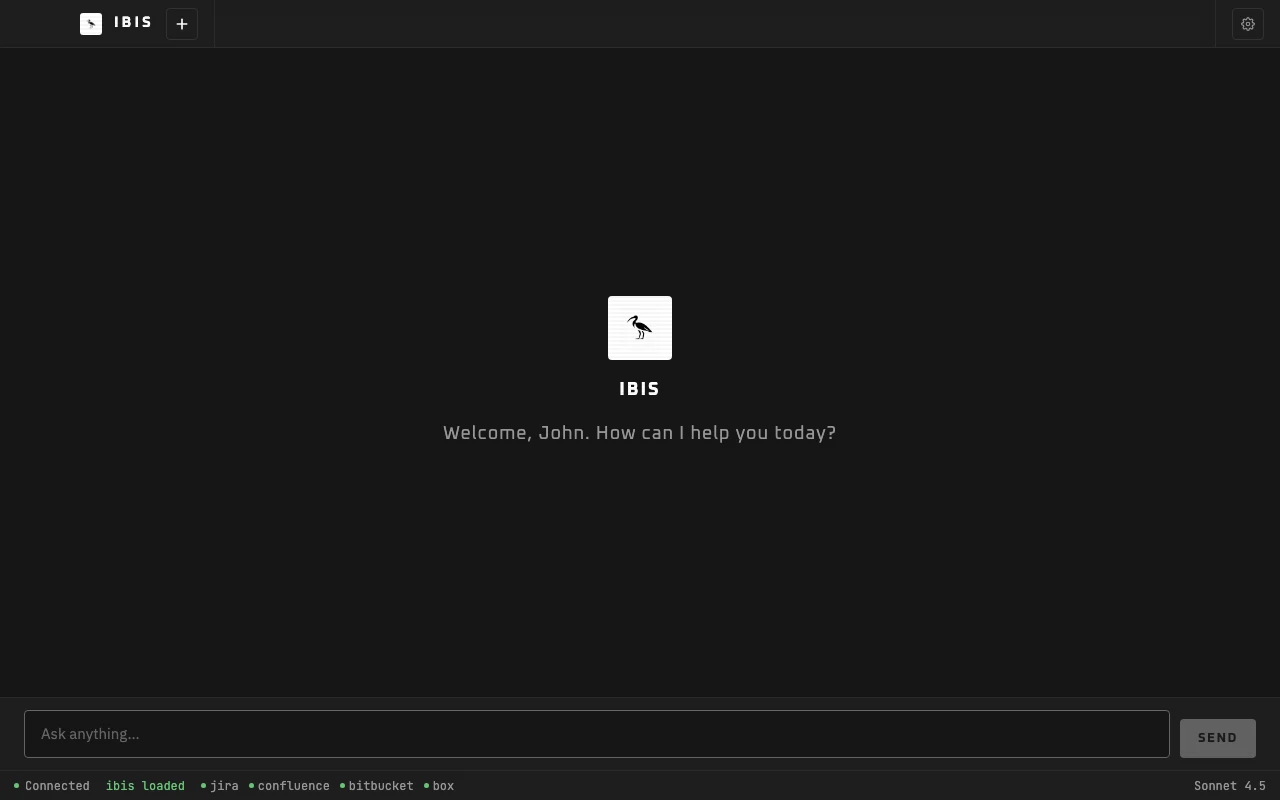
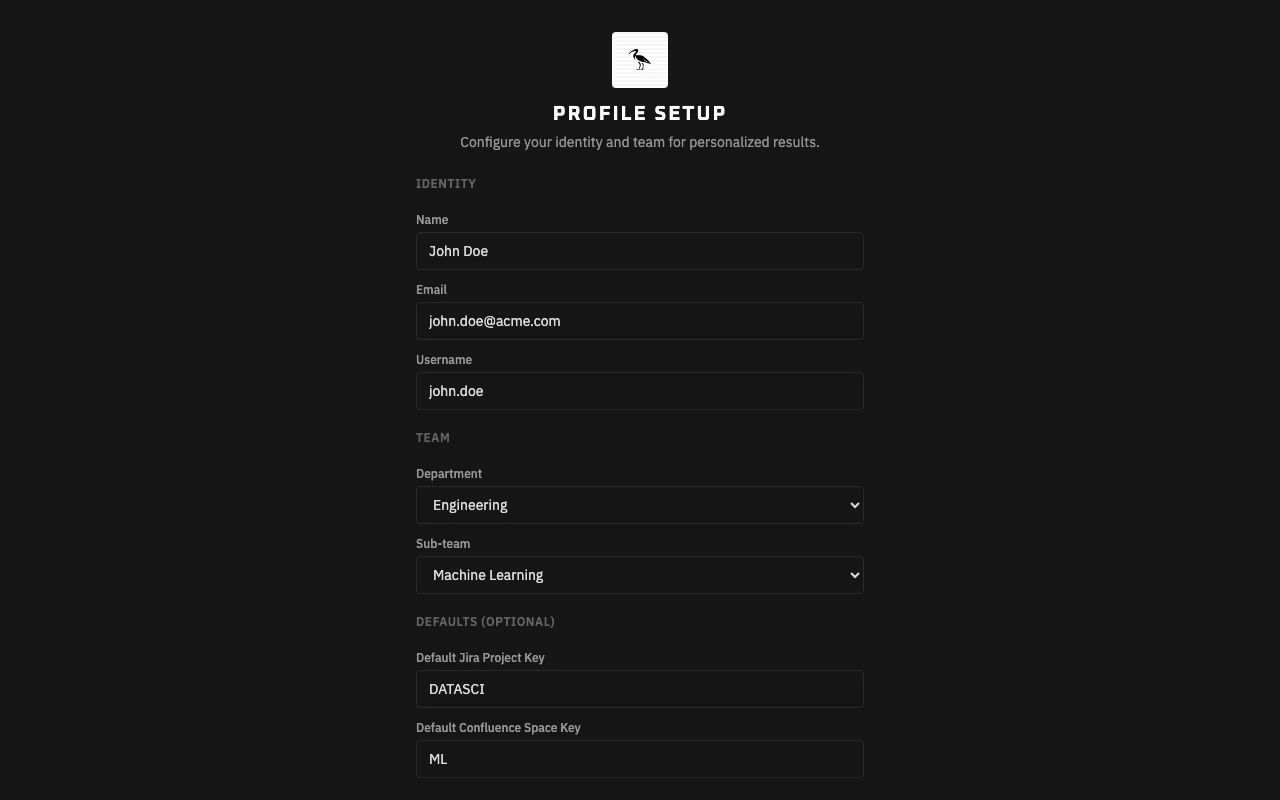
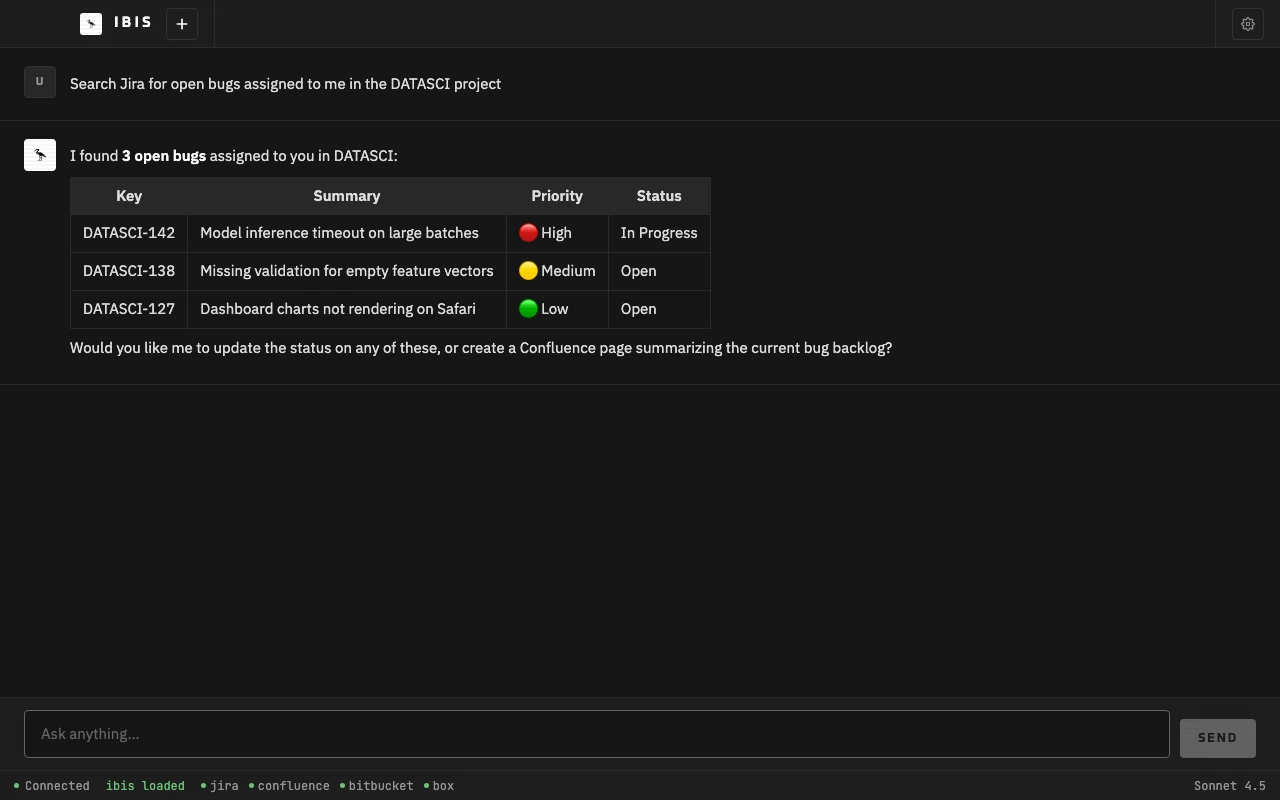
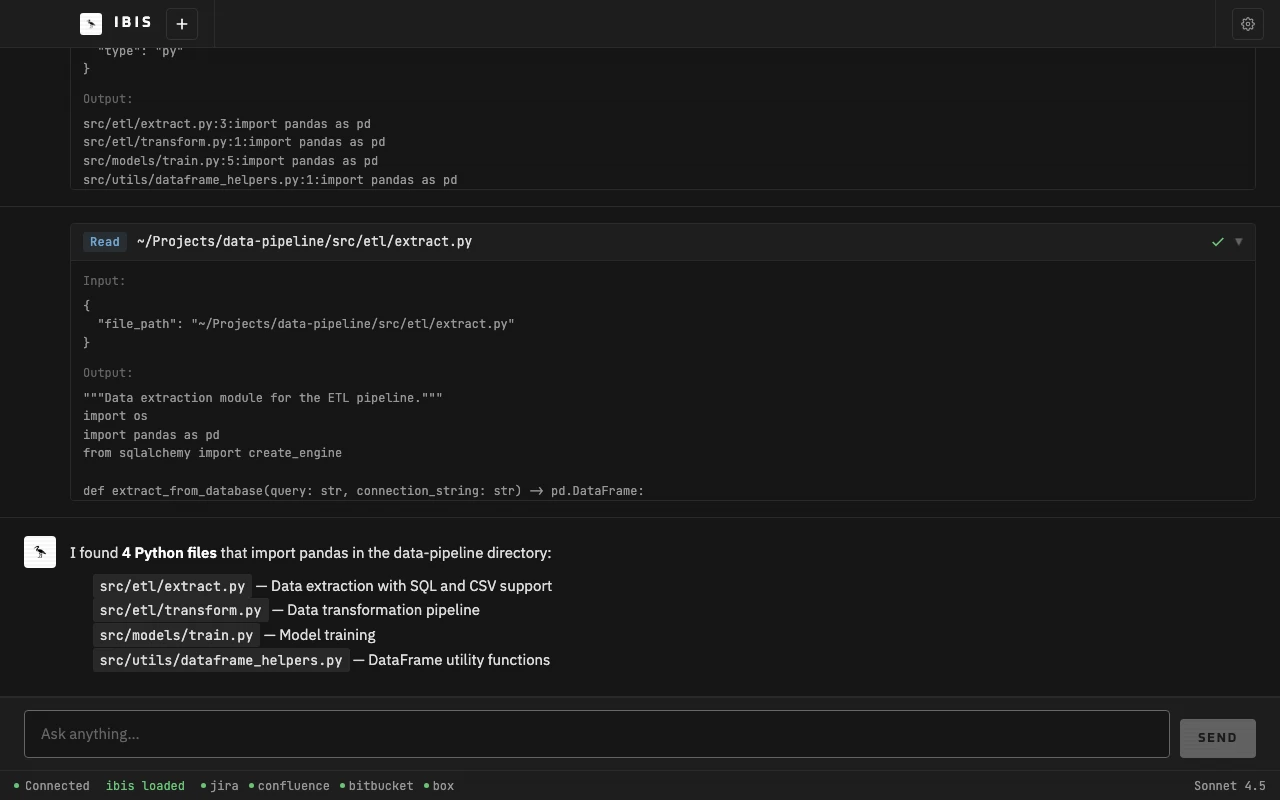
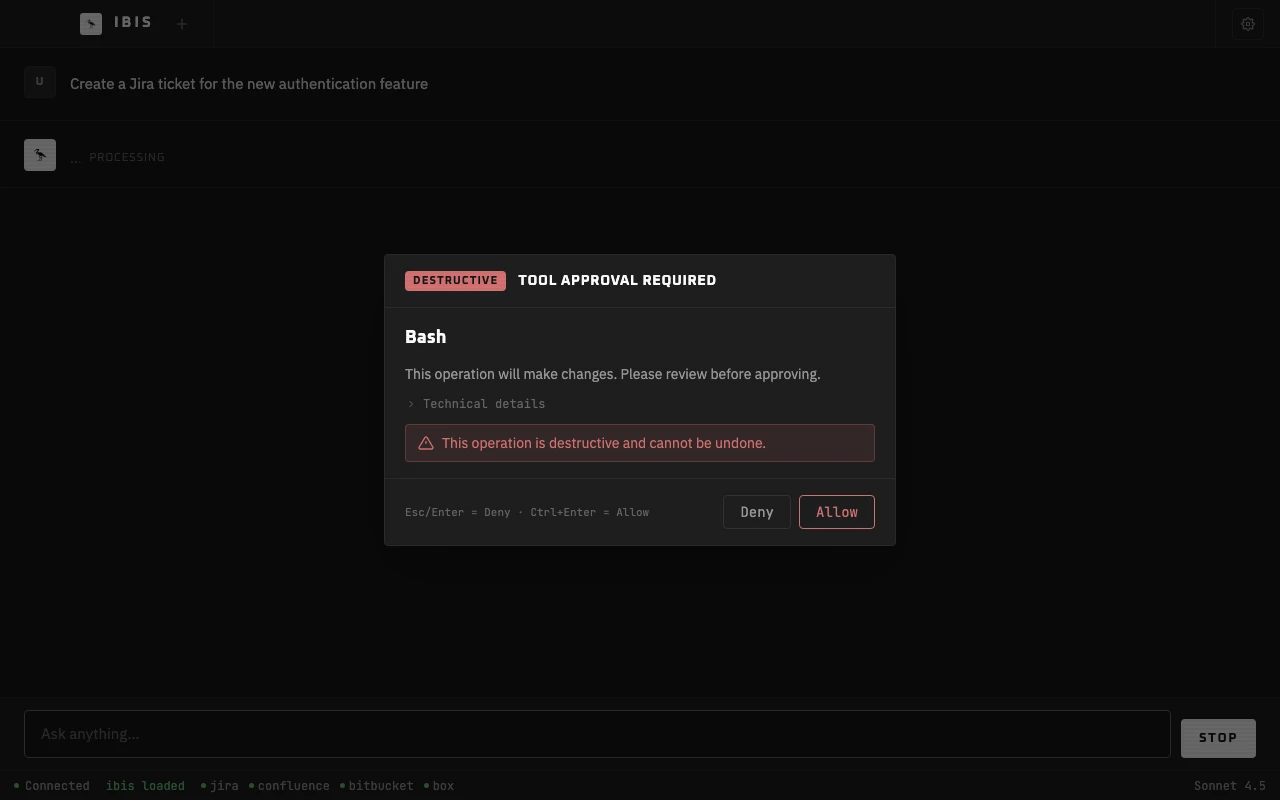
Ibis is an AI powered Mac and Windows desktop app that transforms enterprise workflows requiring five separate systems and dozens of manual steps into a single conversational request, delivering a measured average speedup of 45×.
Ibis
Where traditional software gives you a fixed feature set, Ibis lets users define new workflows in plain English
Beyond speed, Ibis surfaces what manual search misses: pages buried in personal wiki spaces, context scattered across Jira epics and commit histories, and hidden connections between systems.
- Finds buried information humans miss — personal wiki spaces, cross-system connections
- Understands company specific Jira workflow rules: navigates required transitions, prompts for mandatory fields
- Extensible by non-developers: plain-English instructions serve as both automation and documentation
- Built-in safety guardrails: read-only actions run freely, modifications require explicit approval
TypeScript · Electron · React · Python · FastAPI · Claude Agent SDK · Zustand · Tailwind CSS
2026
Pelican
Web App · AI-Powered Classification and Taxonomy Management Platform
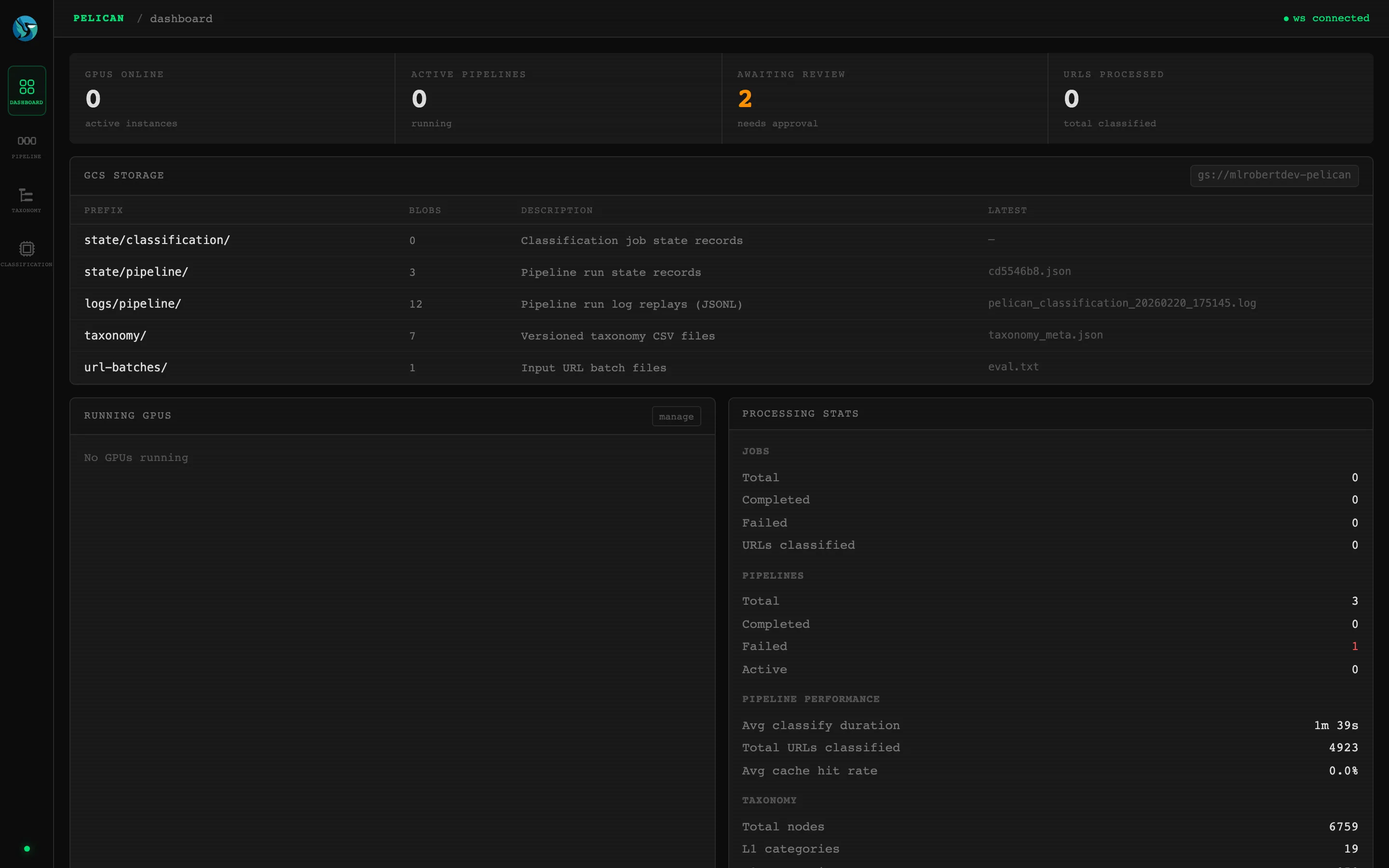
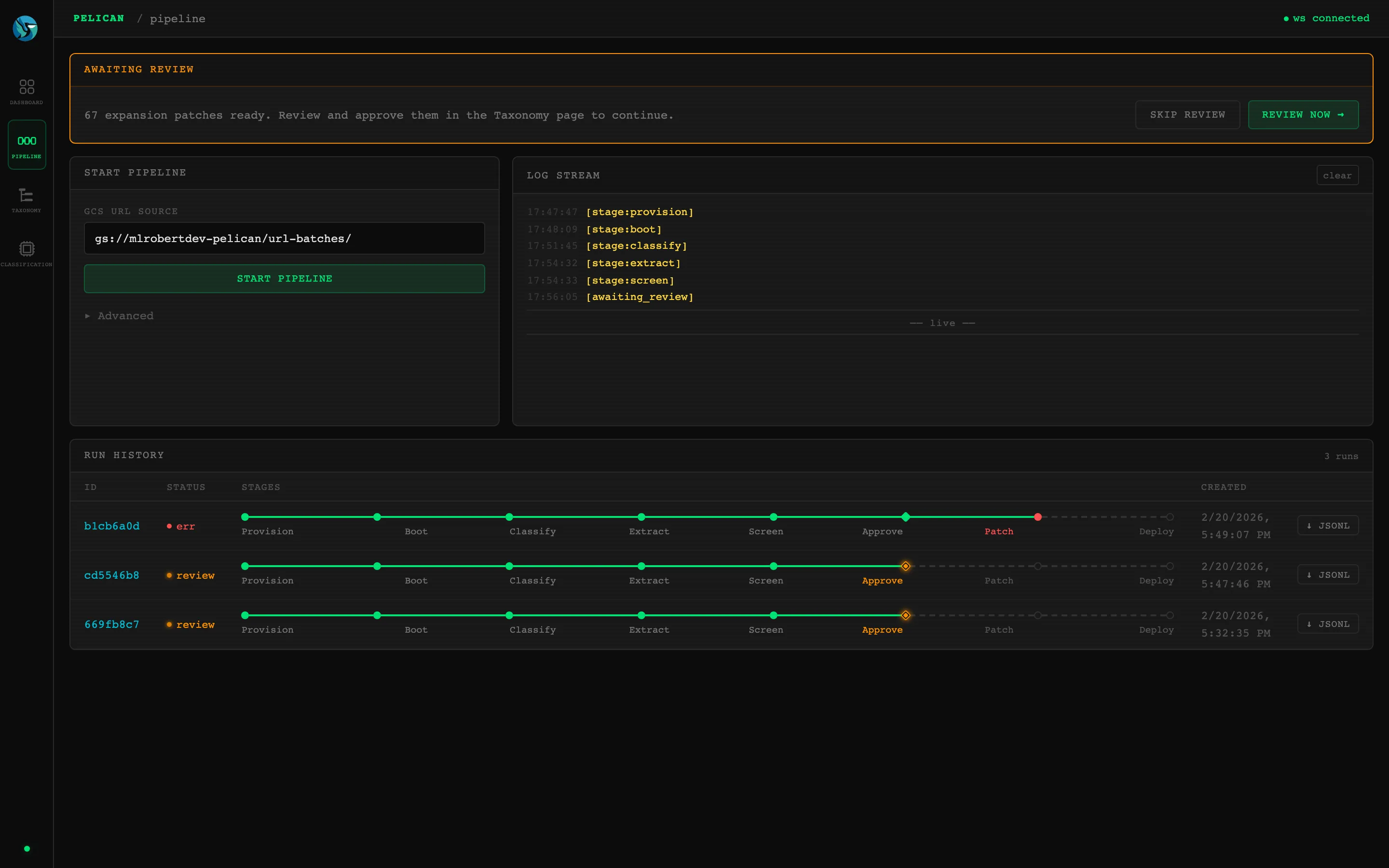
Pelican is an internal AI platform that replaced manual URL classification—previously driven by hand-curated keyword lists spanning 5,000+ taxonomy topics and fragile change-tracking workflows—with self-hosted LLMs that automatically classify pages, propose new taxonomy categories, and validate each recommendation with a second model before human review.

Pelican
Most classification systems assume a fixed set of categories. Pelican treats the taxonomy itself as a living artifact — proposing new branches, validating them, and deploying changes without manual file editing.
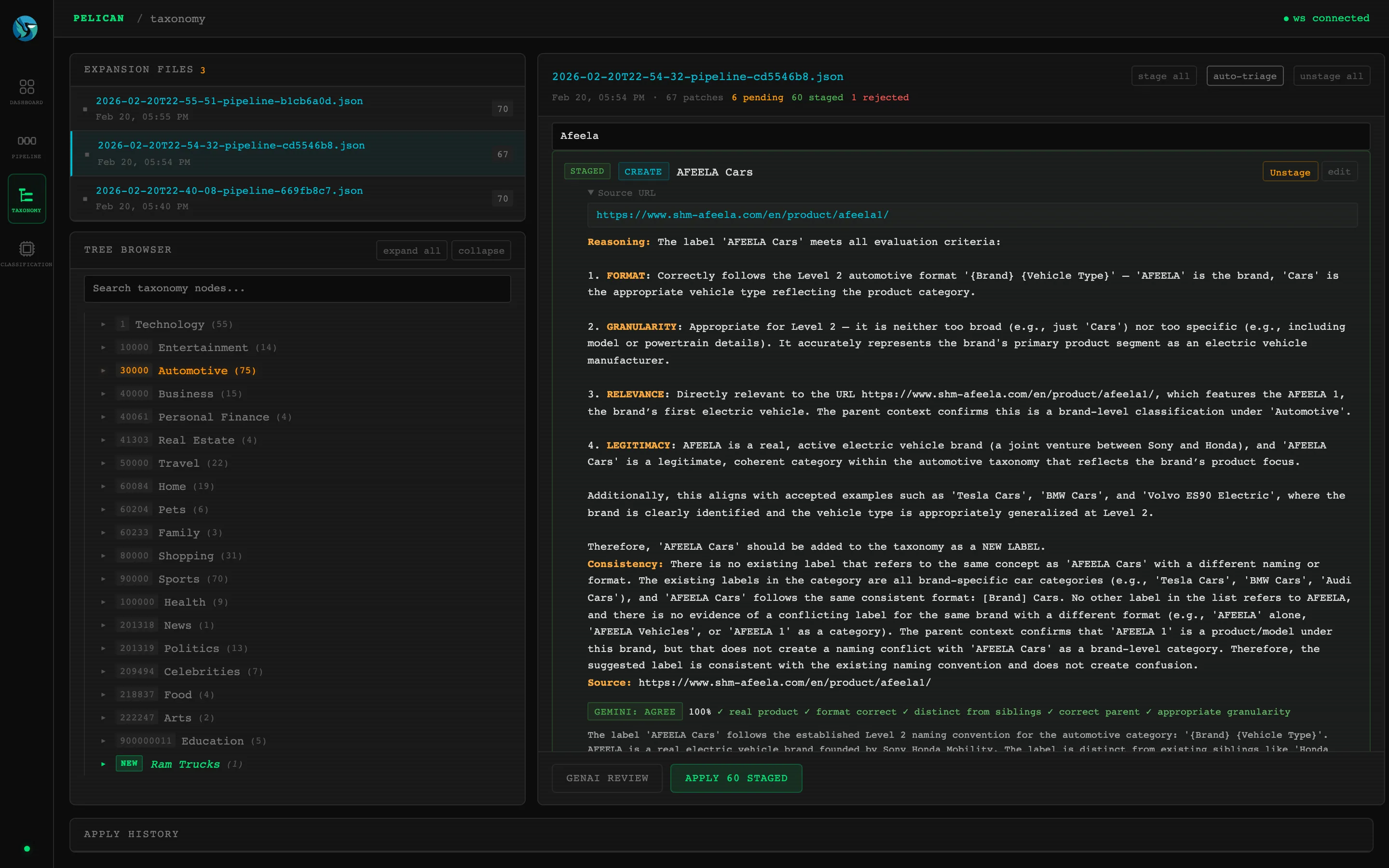
The previous taxonomy only covered what someone had manually anticipated. Pelican closes the gap: it reads the page, recognizes when no category fits, and proposes a new taxonomy node with a parent placement and reasoning. A second model reviews each proposal on five criteria, pre-sorting batches of 200+ into agree, disagree, and uncertain so reviewers inherit a curated queue rather than an unsorted pile. Every approved category immediately propagates to all future classification runs — the taxonomy grows with the content it classifies.
- Reads the page and recognizes when the taxonomy has no good match — proposes a new category, explains why it's needed, and places it in the hierarchy
- Reviewers see proposed categories in context: each new node appears in the tree alongside its siblings before anyone commits to the change
- Auto-triage applies the second model's five-criteria scores in one click — agree gets staged, disagree gets rejected, uncertain is left for human judgment
- Approved categories immediately improve future runs — the taxonomy grows with the content it classifies, closing gaps that would otherwise recur in every batch
Python · Litestar · SvelteKit · Tailwind CSS · DaisyUI · Polars · vLLM · Gemini · Google Cloud
2025
Strix
macOS App · SQLite Database Editor
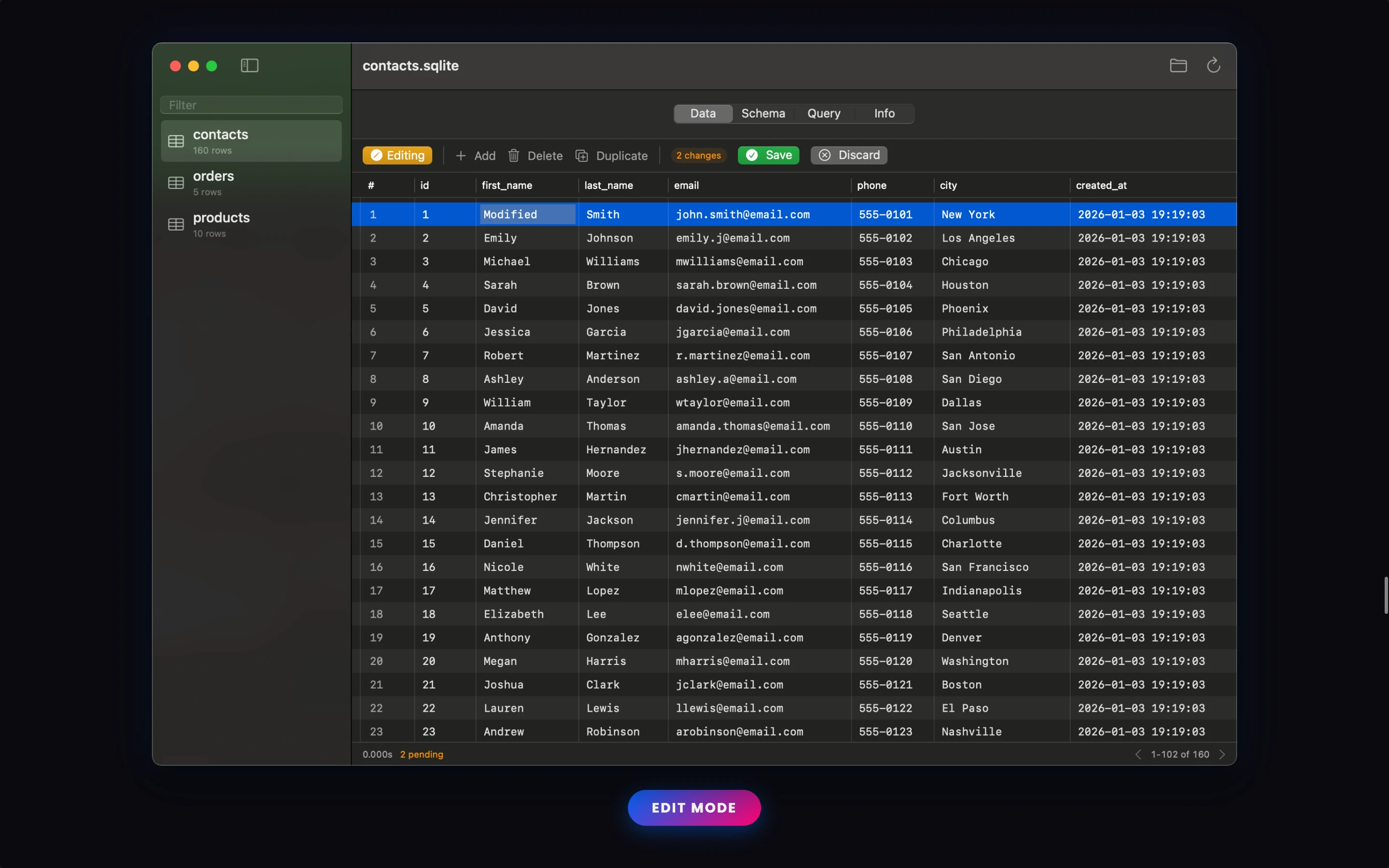
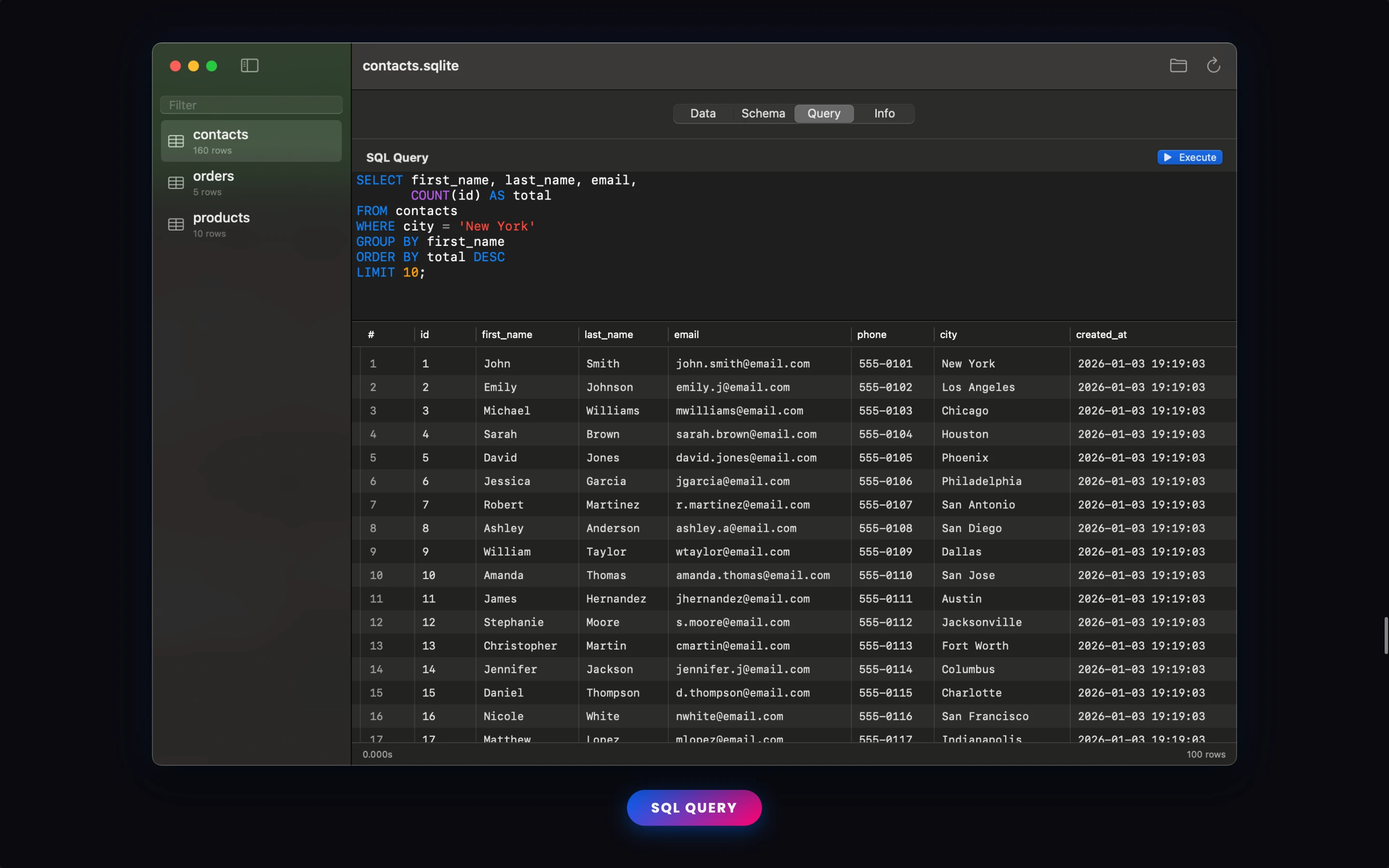
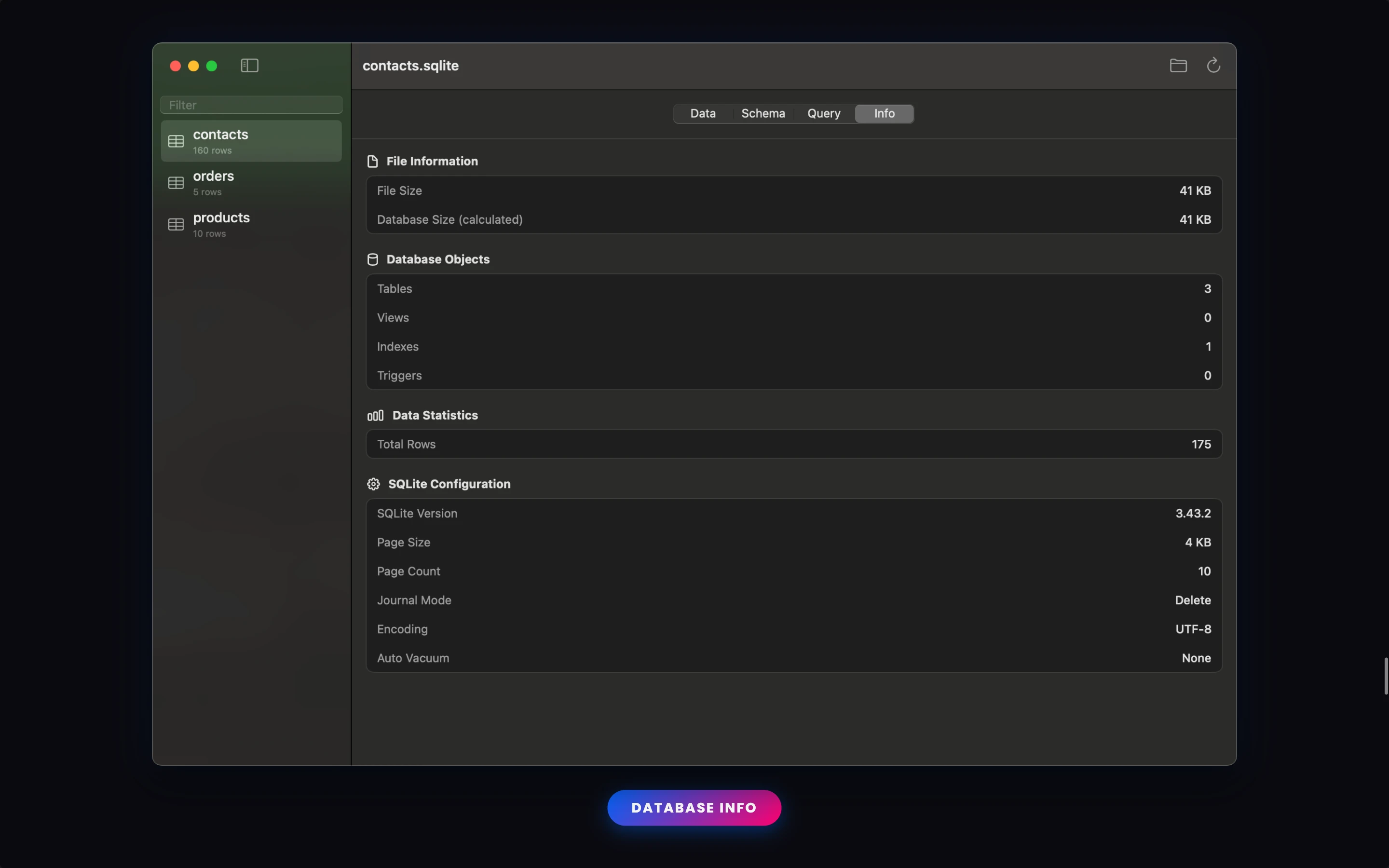
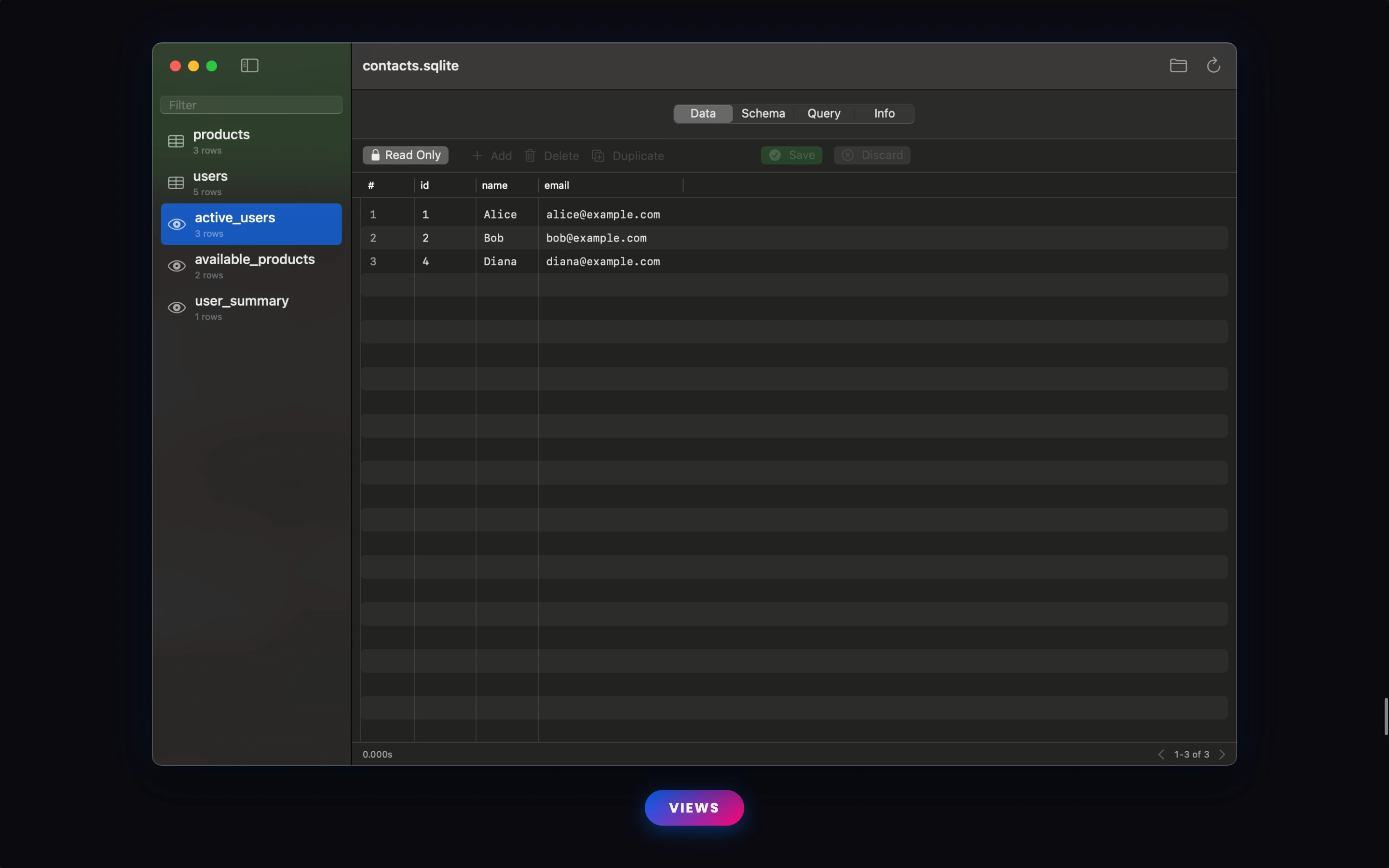
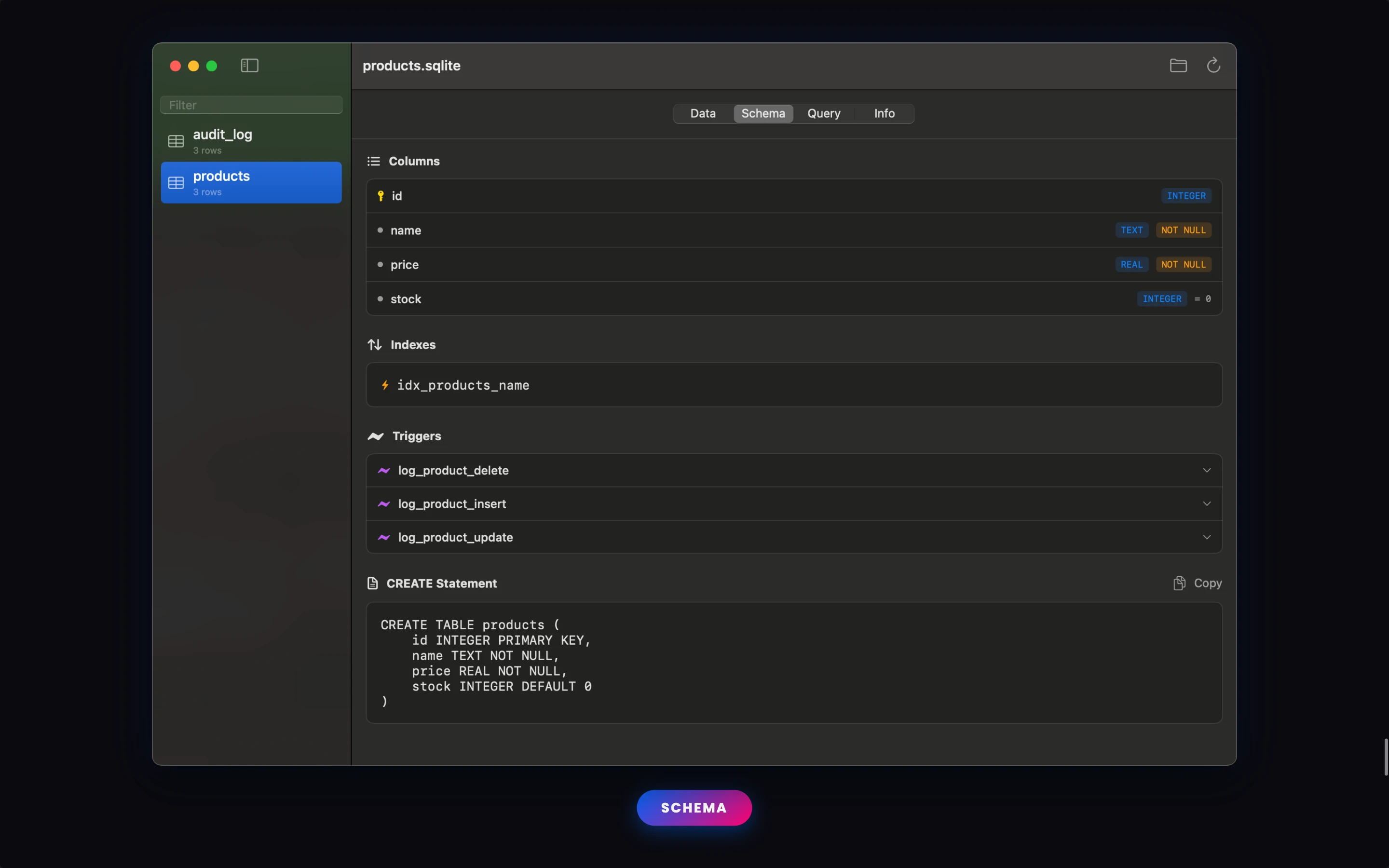
Strix is a native macOS SQLite editor available on the Apple App Store, crafted to make managing SQLite databases as simple and familiar as using Excel.
Strix
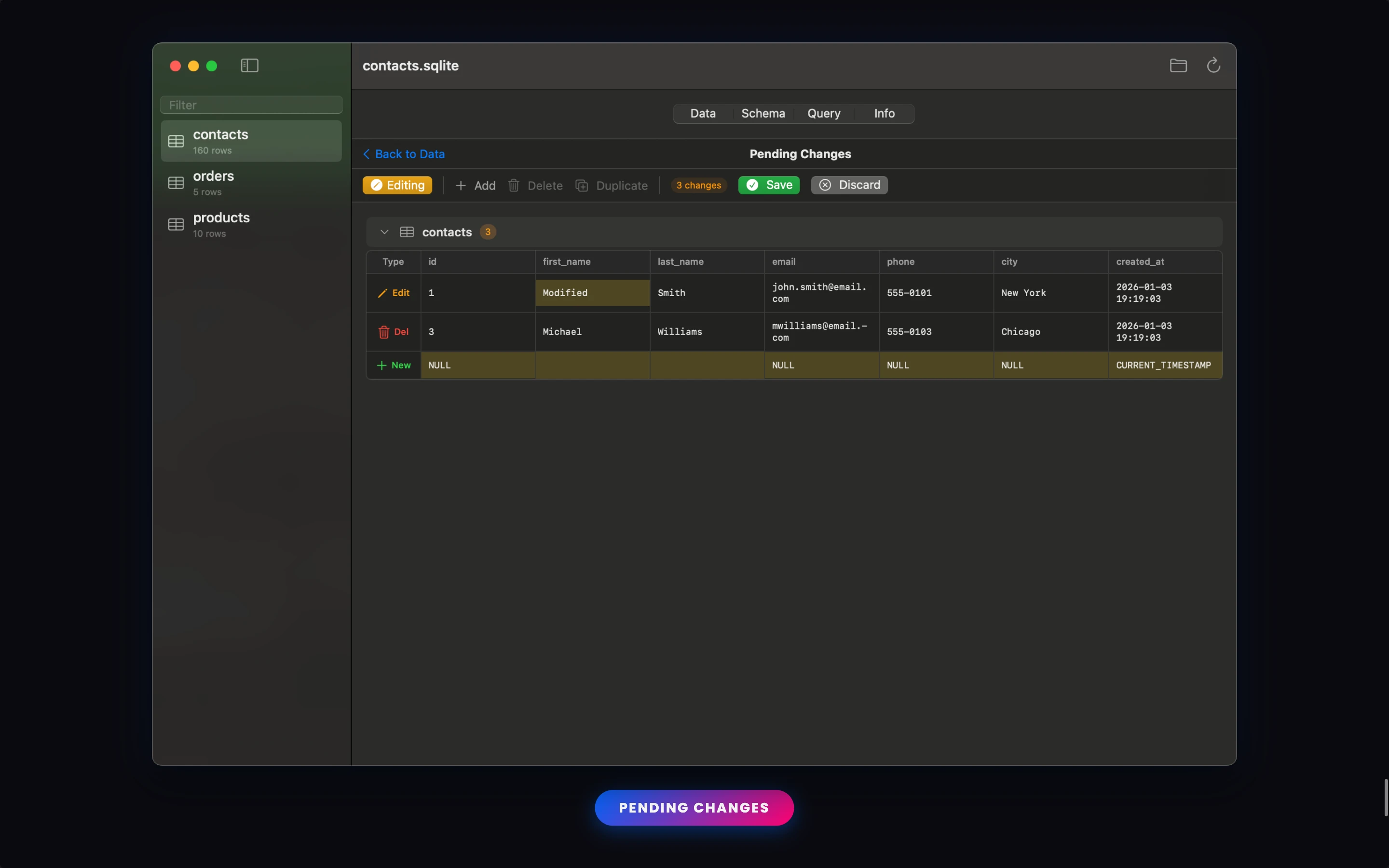
Traditional database tools typically require SQL knowledge and risk instant data loss. Strix lets non-technical users safely edit SQLite databases through visual inline editing and staged change review
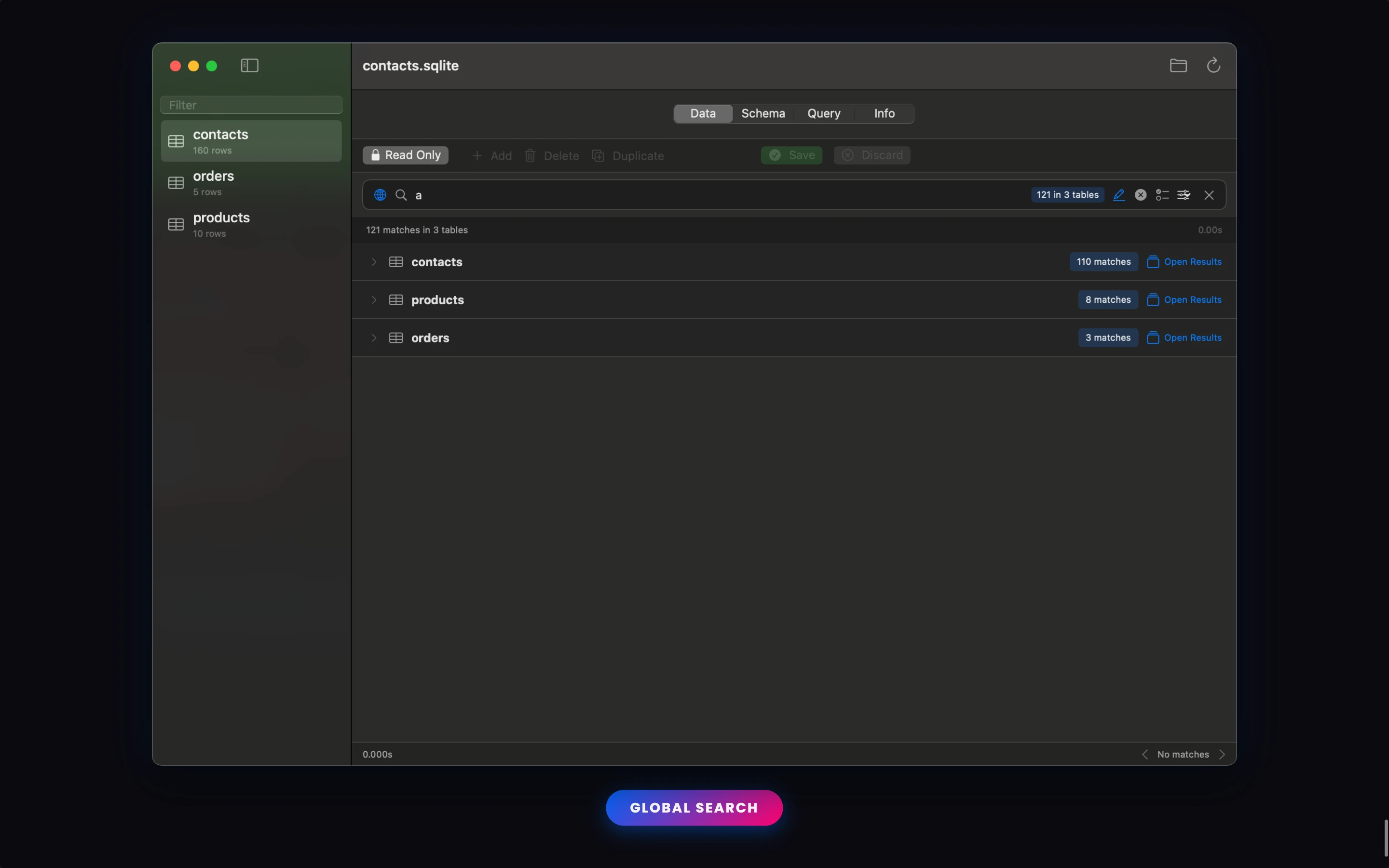
Double-click a cell to edit it. Insert or delete rows with toolbar buttons. Enter a search term and find it anywhere in your database. No special setup or technical knowledge required. Every change is tracked visually with highlighted cells and a review tab showing the full changeset before you save. Database opens read-only by default; explicit edit mode toggle prevents accidental overwrites.
- Search any database without setup: enter a term and find it instantly, even in databases that weren't built with search indexes
- Read-only mode by default: explicit edit toggle required before modifications, preventing accidental overwrites
- Visual inline editing with staged change tracking: see every modification highlighted before committing
- Change tracker maintains original values: editing a cell back to its original automatically removes it from the pending changes review
Swift · SwiftUI · AppKit · GRDB · XCUITest
2025
Sparrow
Web App · AI-powered survey platform
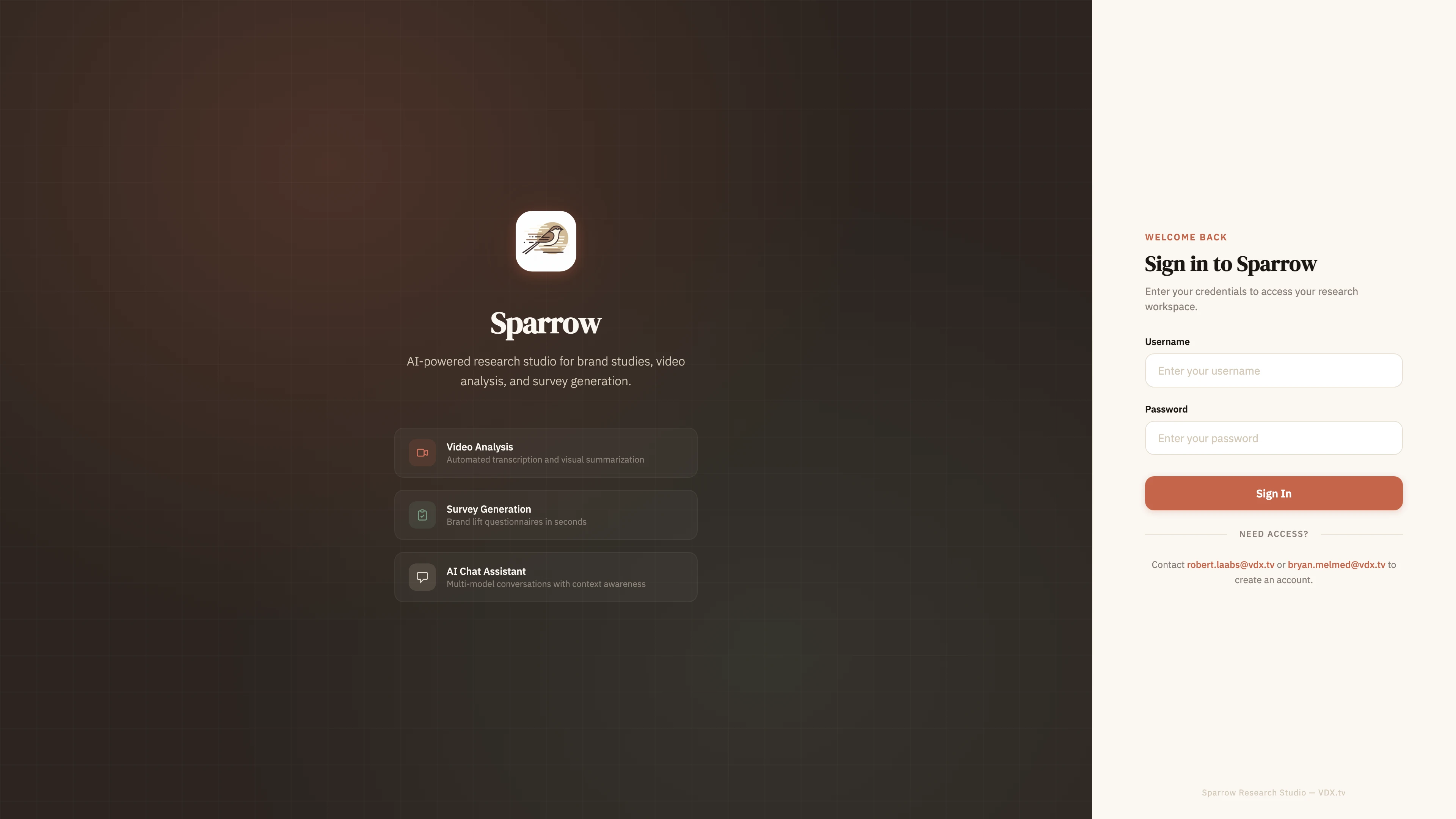
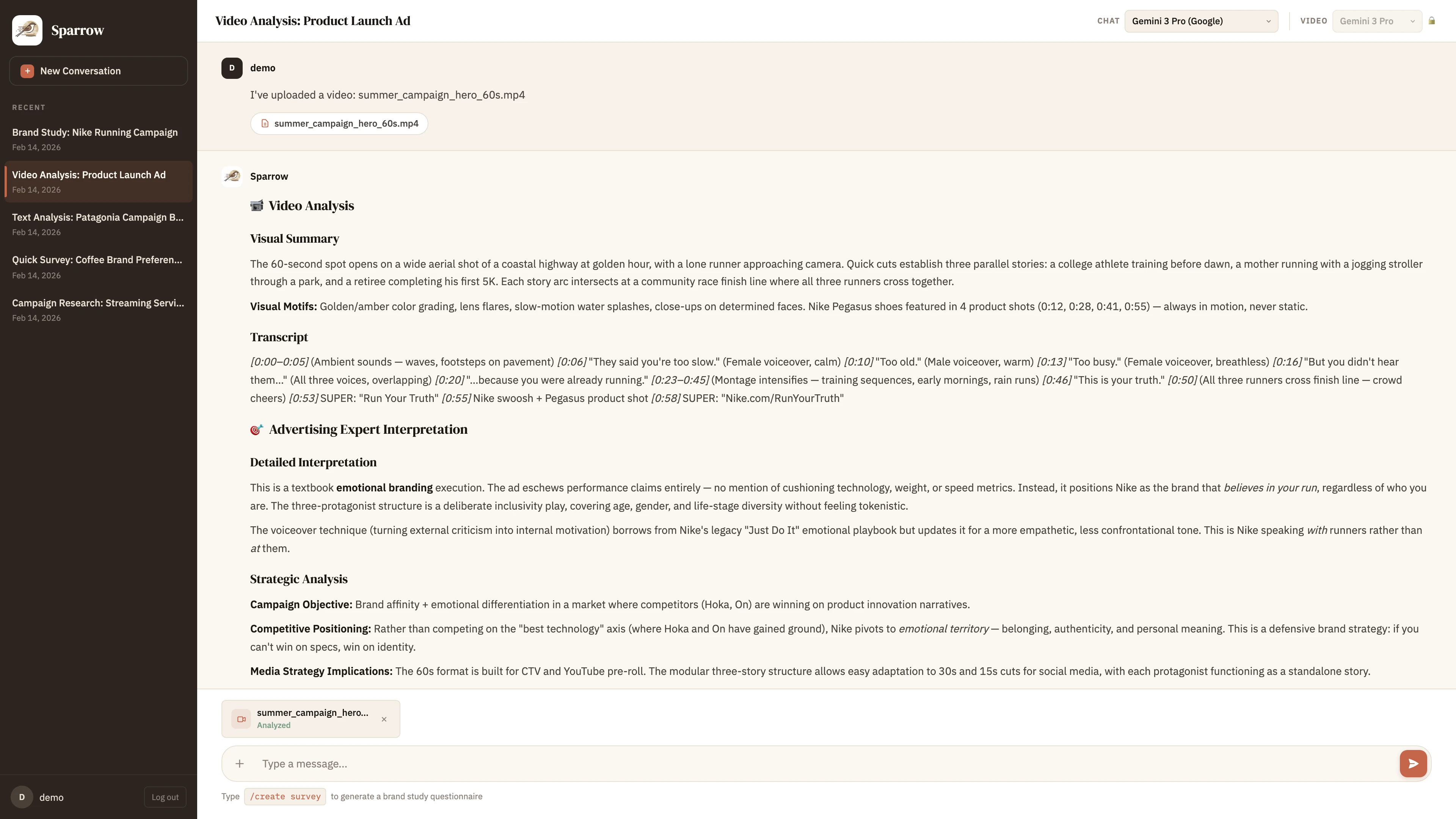
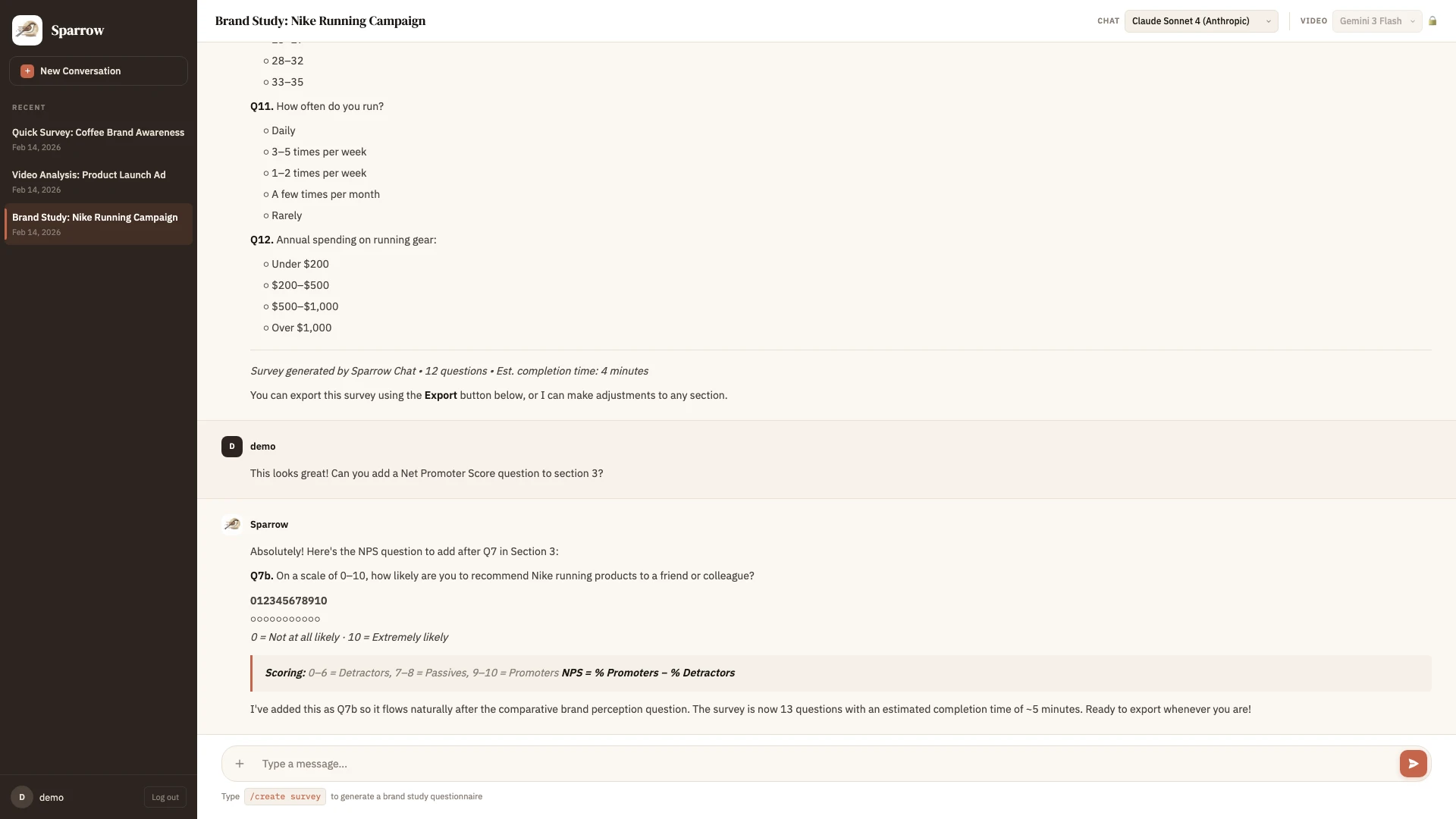
Sparrow is an AI-powered survey platform that cuts brand survey creation from ~4 hours to under 15 minutes. It replaces manual video transcription, strategic analysis, and question drafting with a single upload-and-generate interaction. Used by the research team for all forced-exposure studies.
Sparrow
Surveys are grounded in real-world templates from actual studies, producing questions researchers accept without heavy editing.
Before Sparrow, creating a brand study survey meant watching the ad, manually transcribing it, writing a strategic analysis, researching survey best practices, and hand-crafting dozens of questions with answer keys and randomization logic. Each step required different expertise. Sparrow collapses that into one interaction. The generated surveys follow the same conventions as manually-crafted ones because they're grounded in real client templates.
- Watches video ads twice: first for transcript and visuals, then for strategic interpretation — survey questions reference specific ad moments
- Few-shot prompting with real client survey templates grounds output in market research conventions, not generic LLM knowledge
- Researchers describe survey needs conversationally — no rigid forms, parameters accumulate naturally across messages
Python · Django · Google GenAI · OpenAI · Pydantic · FFmpeg · Docker
2025
Budgie
ML Framework · Synthetic Data Engine
Budgie lets data scientists generate synthetic ML training data by writing a YAML template instead of a Python pipeline. Used in production to generate training sets for content categorization models.
Budgie
Budgie separates the domain question — what should this data look like — from the engineering problem of generating it reliably
Training an ML model requires thousands of labeled examples, and collecting them by hand is slow and expensive. Synthetic data — realistic generated examples that teach the model the same patterns — solves this, but generating it reliably at scale is its own problem. Batches come back incomplete, duplicates creep in, jobs crash overnight. Budgie handles all of that: it knows what's already been accepted, asks only for the gap, and resumes automatically from where it stopped.
- No-code for new data types: a data scientist writes a Jinja2 YAML template; no Python required to define a new generation task
- Accumulation-aware retries: on partial results, the LLM receives exactly what's missing and what's already accepted — preventing duplicates across attempts
- Stateless crash recovery: progress is derived from the output file itself, so there's no separate state to corrupt or fall out of sync
- Currently training Pelican, the content categorization system — generating synthetic URLs across taxonomy hierarchies, tracking-parameter variants, and CTV patterns
Python · asyncio · OpenAI · Pydantic · Jinja2 · MLX · Polars
2024
Magpie
Web App · AI-Powered survey fraud and quality detection
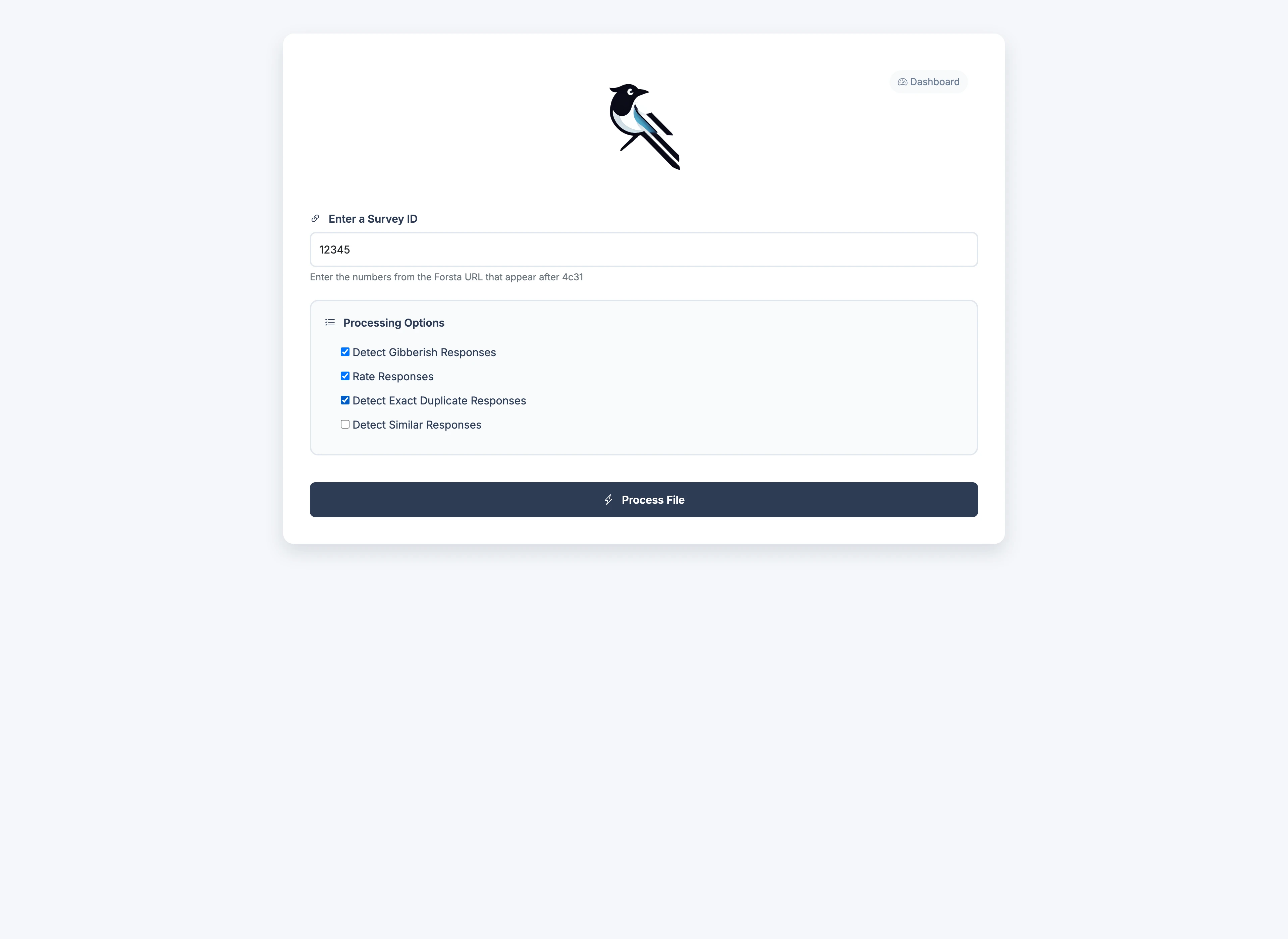
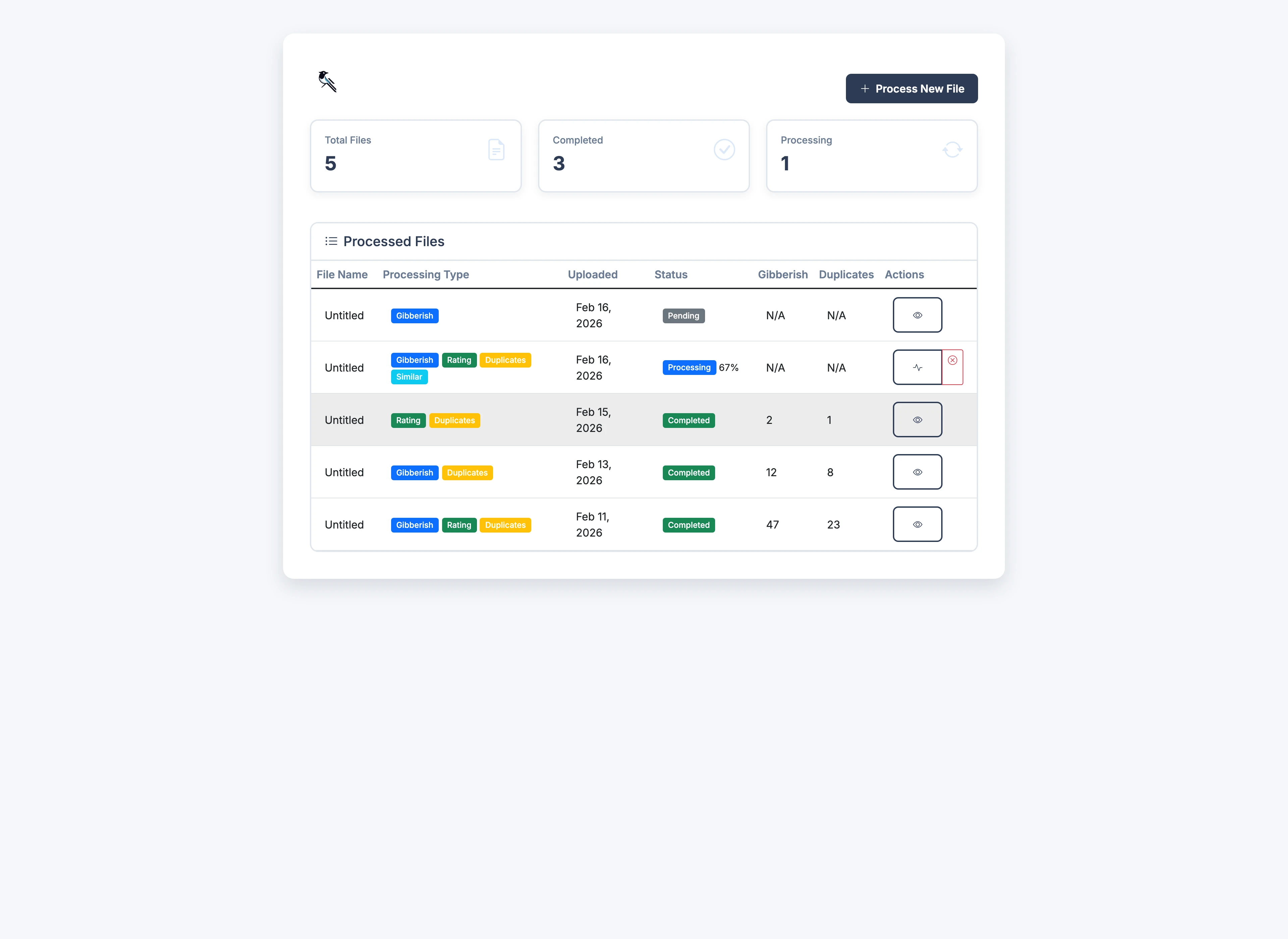
Magpie is a survey fraud and quality detection platform that replaces a ~5-hour manual cleaning process with automated AI analysis that catches what humans miss — saving 250+ hours annually and reclaiming over $10,000 in fraudulent responses in 2025.
Magpie
Most quality checks flag obvious junk. Magpie understands the question being asked — and judges whether the answer actually addresses it.
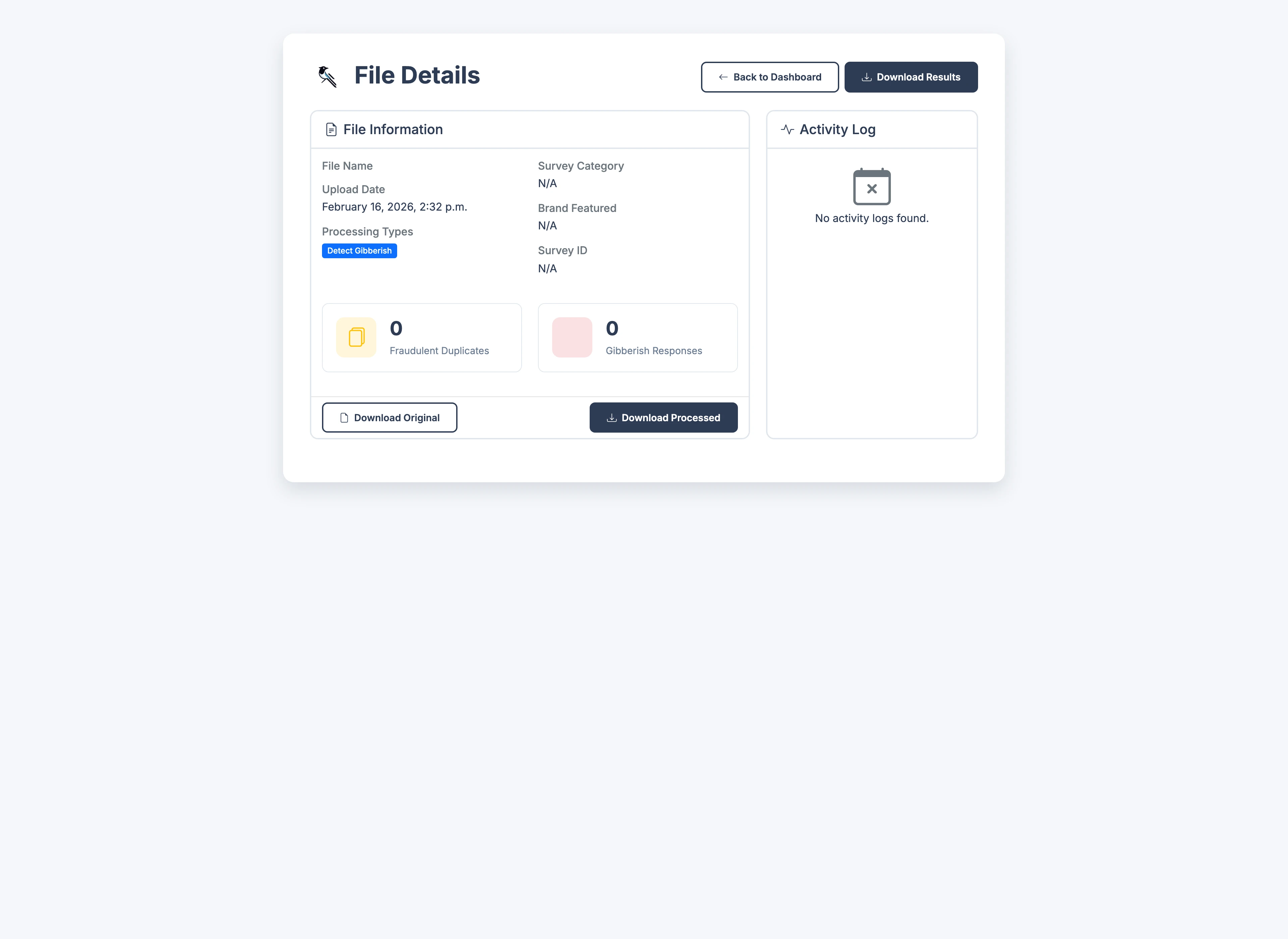
Survey fraud isn't just gibberish. Professional survey-takers submit coherent-sounding responses that technically answer the question but reveal no real thought. Magpie catches both: a fine-tuned language model scores each response against the specific question's intent, while a separate clustering engine identifies coordinated fraud rings — groups of respondents with suspiciously similar answer patterns. In 2025, it reclaimed over $10,000 in fraudulent responses.
- Understands when duplicates are normal — brand name questions and demographics are automatically excluded from fraud flags
- Rates response quality on a 6-point scale: not just "gibberish or not" but how thoughtful and specific each answer is
- Processes raw SPSS survey files from Forsta — upload a zip, get flagged results back, no data prep required
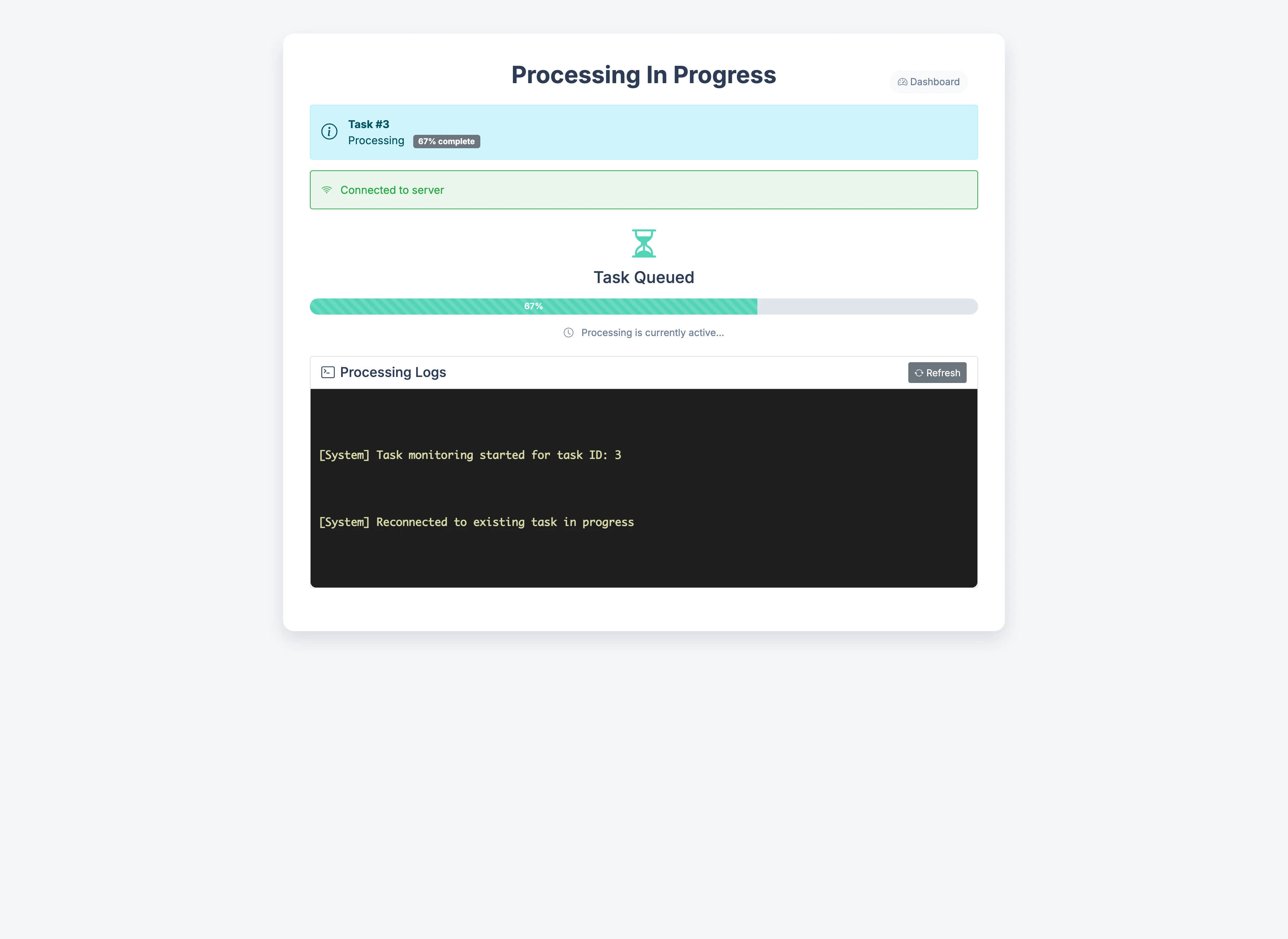
- Live progress over WebSocket — researchers watch processing happen in real time instead of waiting for an email
Python · Django · Django Channels · OpenAI · HTMX · Polars · scikit-learn · Redis
2020
Mallard
Web App · Audience Analytics Platform
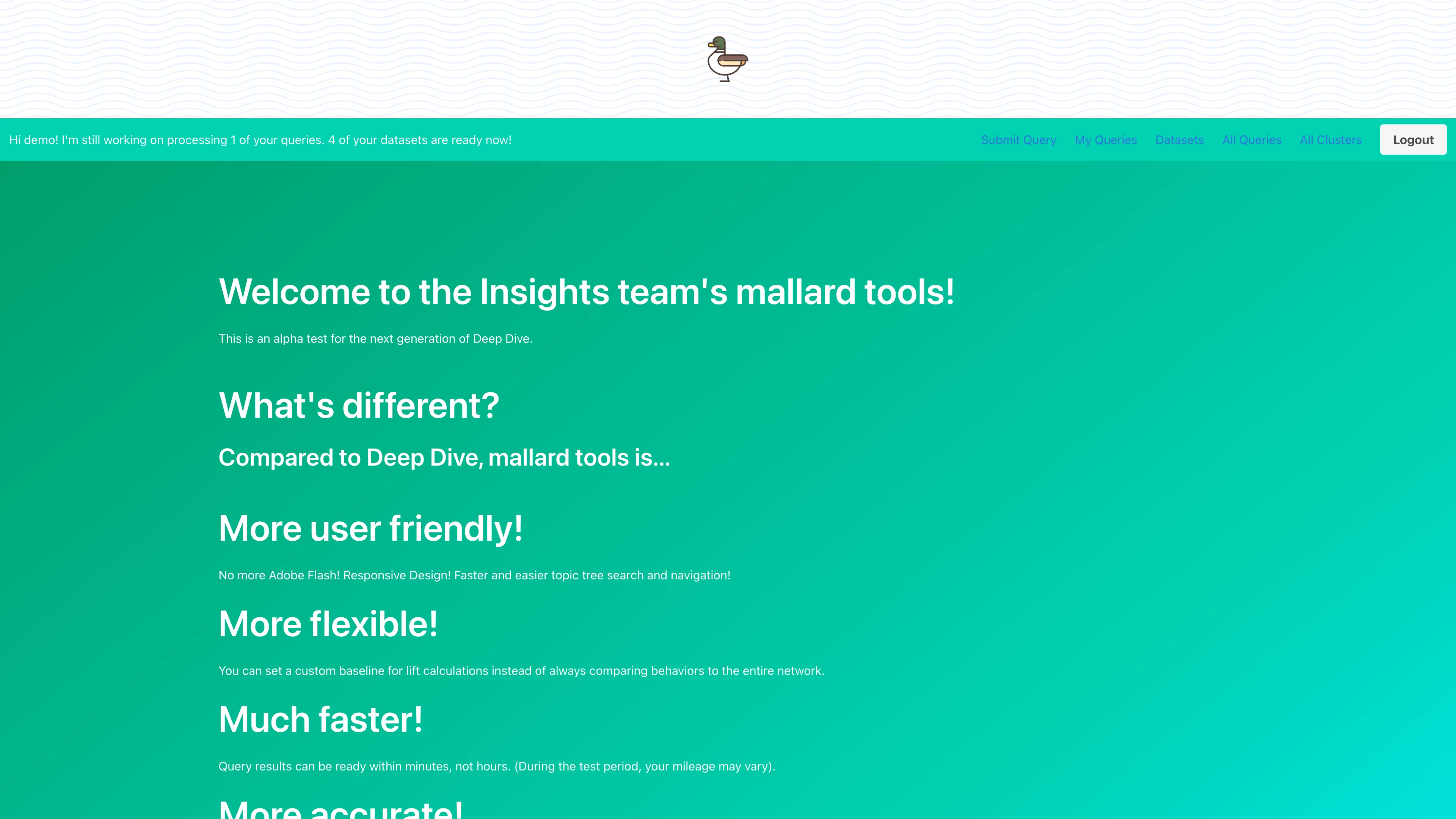
Mallard is a self-service audience behavioral analytics platform that replaced an aging Adobe Flash-based tool. 5 years in production with zero downtime.
Mallard
Spins up a 15-node compute cluster for each query, then destroys it — so the company only pays for the minutes it actually uses
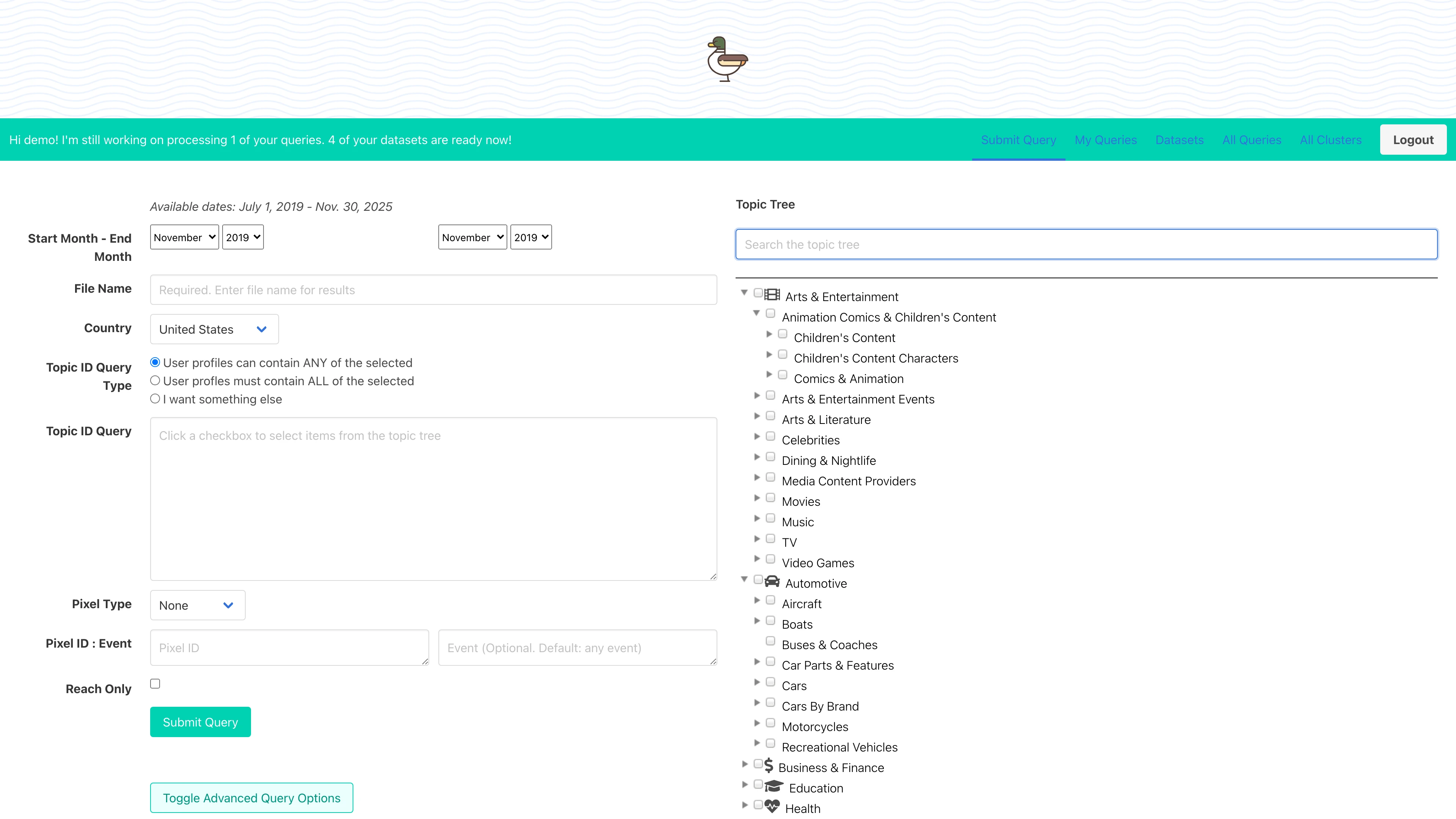
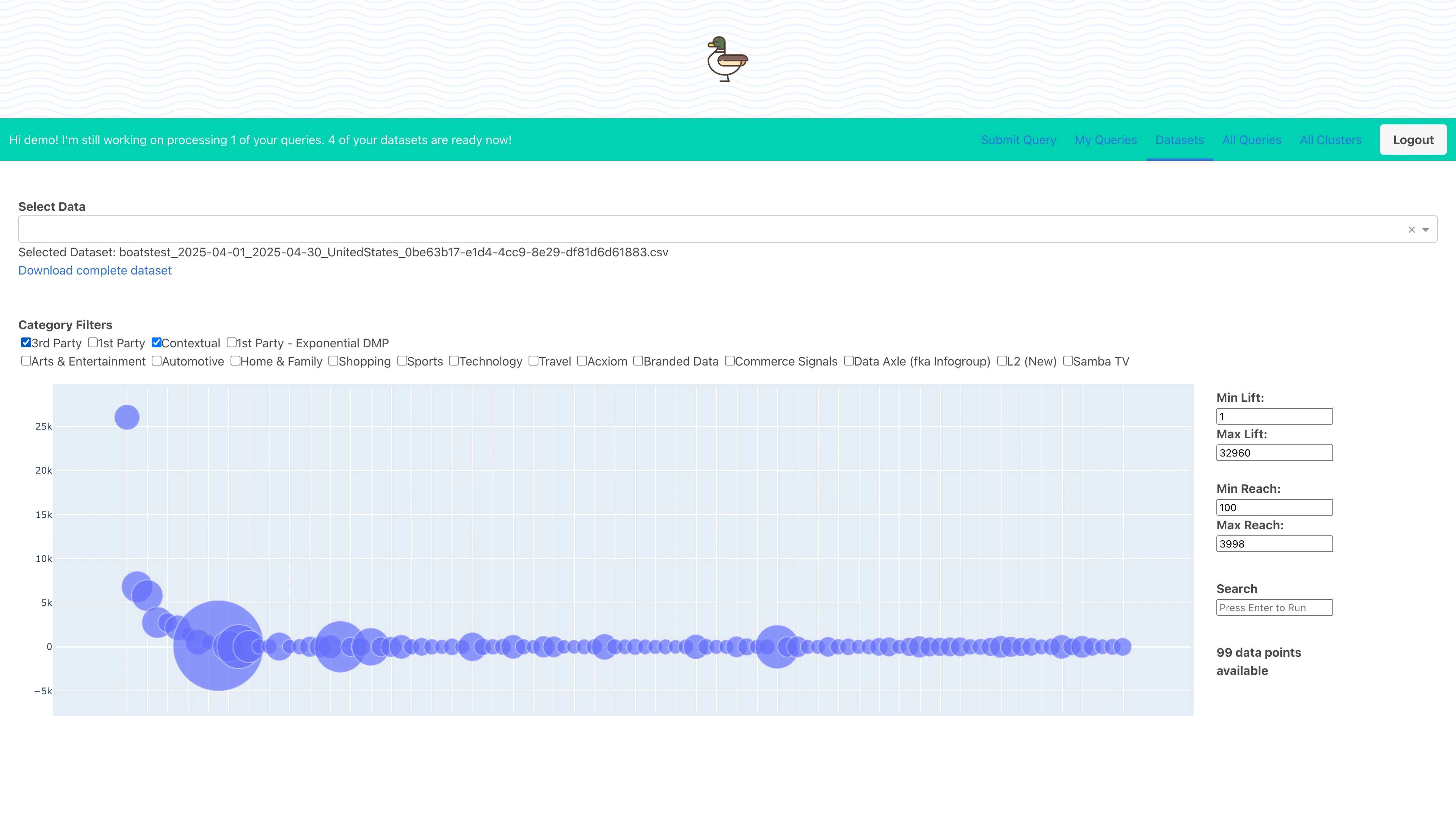
Non-technical researchers query behavioral datasets directly — selecting from a hierarchical taxonomy of thousands of audience behaviors, then exploring lift analysis, reach counts, and geographic breakdowns through interactive dashboards. Processing time dropped from 24+ hours to about 5 minutes.
- Each query provisions ~$3 of EC2 compute and tears it down — versus the ~$4,100/month an always-on cluster would cost
- Handles arbitrary date ranges across monthly data partitions — each combination of full months, partial months, and cross-month spans requires a different data loading strategy
- Results land in an interactive dashboard — lift vs. reach scatter plots, state-level geographic heatmaps, category filtering, and one-click CSV export
Python · Django · PySpark · AWS (EC2/S3) · Plotly Dash · PostgreSQL · Redis · Docker